🌿 Fresh Live Plants Delivered Safely | 🚚 Nationwide Delivery | 💳 Advance Payment Required for Plants, Liquids & Parcels over 3kg

Easy & Proven Guide to Growing Strawberry Roots at Home

Introduction
Think strawberries need big farms? Not at all.
With healthy strawberry roots and basic care, even a balcony or small pot can give you sweet, homegrown berries. They grow great in Lahore, Karachi, Islamabad — basically anywhere in Pakistan if you plant at the right time.
Berry lovers, grow your own strawberries with this simple guide. Plant today, and let your garden reward you with a fruitful harvest.
This simple guide covers the best planting season, soil, watering, and harvesting. Perfect for beginners who want fresh strawberries without the fuss 🍓
Ready to start? Explore Strawberry Roots on SeedBeej.pk
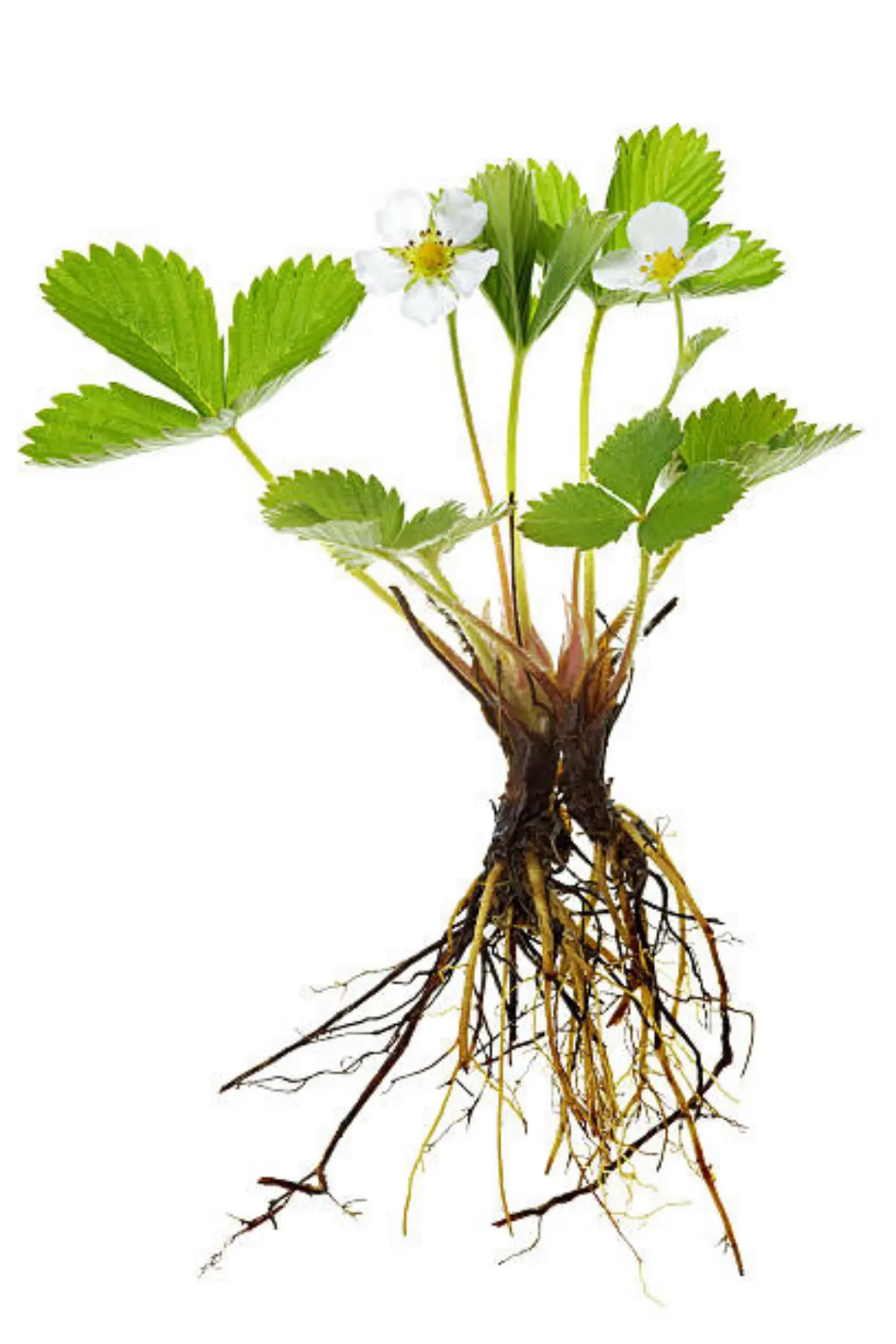
🌱 What Are Strawberry Roots and Why Choose Them?
Strawberry roots are just dormant plants with no leaves yet — also called bare-root plants. Plant them in soil and they wake up fast.
Why roots beat seeds:
- Faster growth – They sprout and spread quicker than seeds.
- Earlier fruit – You get berries in the first season itself.
- Higher success – Much easier for beginners. Less guesswork.
Perfect for:
- First-time gardeners
- Balconies & terraces
- Pots, grow bags, small kitchen gardens
That’s why strawberry roots on SeedBeej.pk are a hit — easy to plant, fast to grow, and great yield even in small spaces.
.
📅 Best Sowing Season for Strawberry Roots in Pakistan
Timing makes all the difference.
Plant between: September to December
- Cooler weather helps roots settle before flowers and berries show up in late winter + early spring.
Skip peak summer – Too much heat stresses young plants.
Plant at the right time, and your strawberries will thank you with sweeter fruit 🍓
🪴 How to Plant Strawberry Roots (Step-by-Step)
Plant them right once, and growth takes care of itself.
| Steps | Instructions |
|---|---|
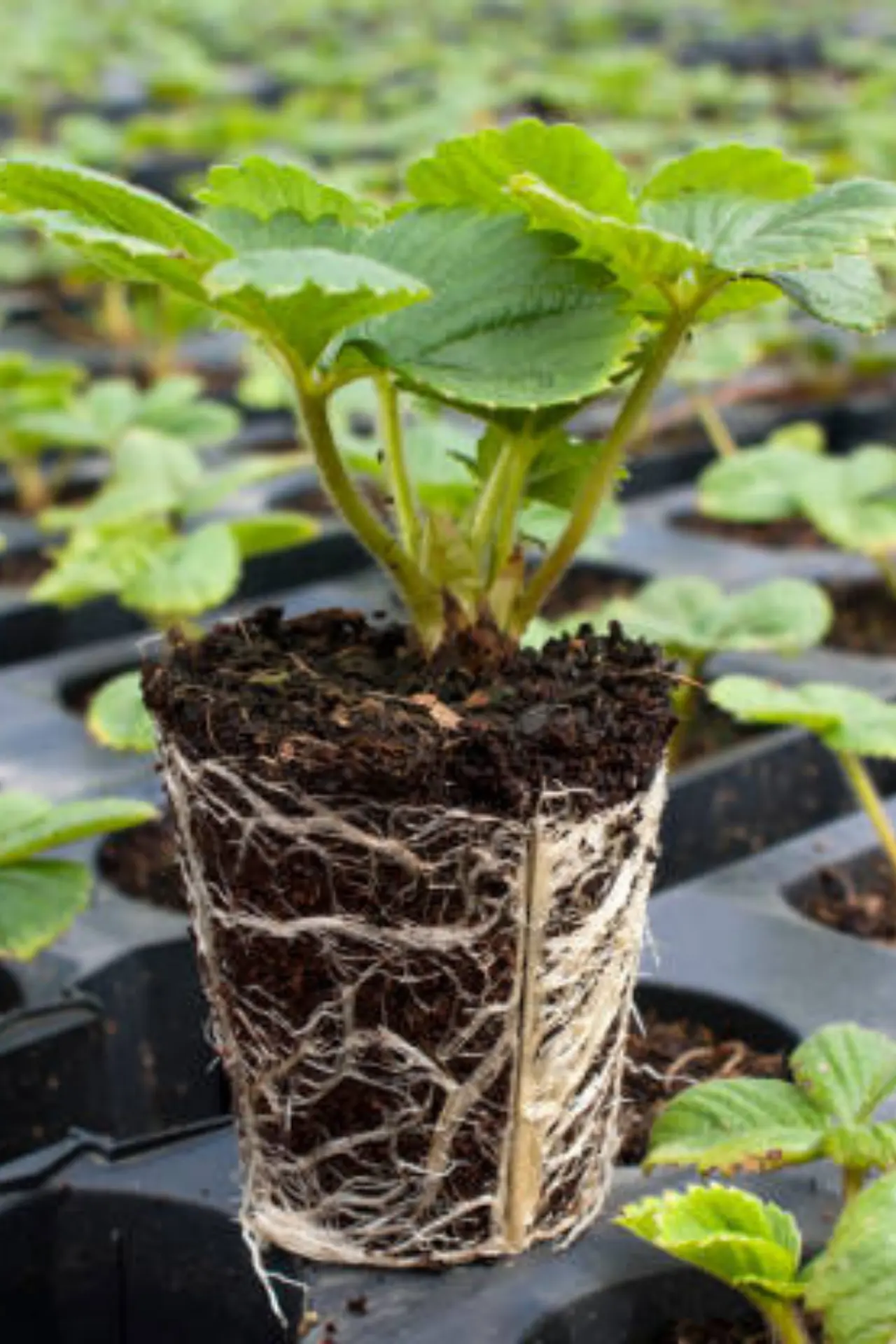
| 1. Prepare the Soil | Mix 40% garden soil + 40% compost/vermicompost + 20% sand or coco peat. Must drain well. |
| 2. Choose a Container | Use any pot or grow bag with drainage holes. 8-10 inches deep is perfect. |
| 3. Plant the Roots | Place roots gently. Keep the crown just above soil level. Lightly press soil and give soft water. |
Done right = strong plants + sweeter berries 🍓
.
💧 Watering Needs for Strawberry Plants
Strawberries want moisture, not soggy soil..
✔ Water when the top soil feels dry to touch
✔ Morning watering = best for roots
✘ Too much water = root rot, so skip it
Fruiting time tip: Water a little, but regularly. Keeps berries plump + sweet.
🌿 Fertilizer & Nutrition Tips
Healthy feeding means sweeter strawberries.
Best options:
| Growth Stage | Fertilizer Type | Application Tips |
|---|---|---|
| Before Planting | Well-rotted compost / organic manure | Mix into soil to improve fertility and drainage |
| Early Leaf Growth | Balanced NPK (10-10-10) | Apply lightly to encourage healthy foliage |
| Flowering Stage | Potassium-rich fertilizer | Supports flower formation and fruit quality |
| Fruit Development | Compost tea / liquid organic feed | Apply every 15–20 days for steady nutrition |
| Post-Harvest | Organic compost | Helps plants recover and build strength |
Avoid excessive nitrogen—it promotes leaves instead of fruit.
Explore Best fertilizers and organic compost at SeedBeej.pk
🌱 Short & Easy Nutrition Tips
- Soil first – Well-drained + nutrient-rich mix for roots
- Less is more – Skip heavy nitrogen. Too much = leaves, no berries
- Add potassium – Boosts sweetness + red color
- Go organic – Safer for home pots, keeps soil alive
- Water after feeding – Helps roots absorb nutrients
- Mulch – Locks in moisture + nutrients
⭐ Beginner tip: Light, regular feeding beats one heavy dose.
☀️ Sunlight Requirements
Strawberries need 6-8 hours direct sun daily.
Morning sun on balconies = perfect. Less sun = fewer fruits.
Feed light, give sun, get sweet berries 🍓
🌸 Flowering & Fruit Development
After planting, your strawberries move fast:
- Flowers start in 4-6 weeks
- Berries form right after pollination
- Pro tip: Pinch off the first few flowers. Sounds weird, but it makes plants stronger + gives you more/bigger berries later
Remove the first few flowers for stronger plants and better yield later.
🍓 How to Harvest Strawberries Properly
Harvesting at the right time improves taste and plant health.
3 rules:
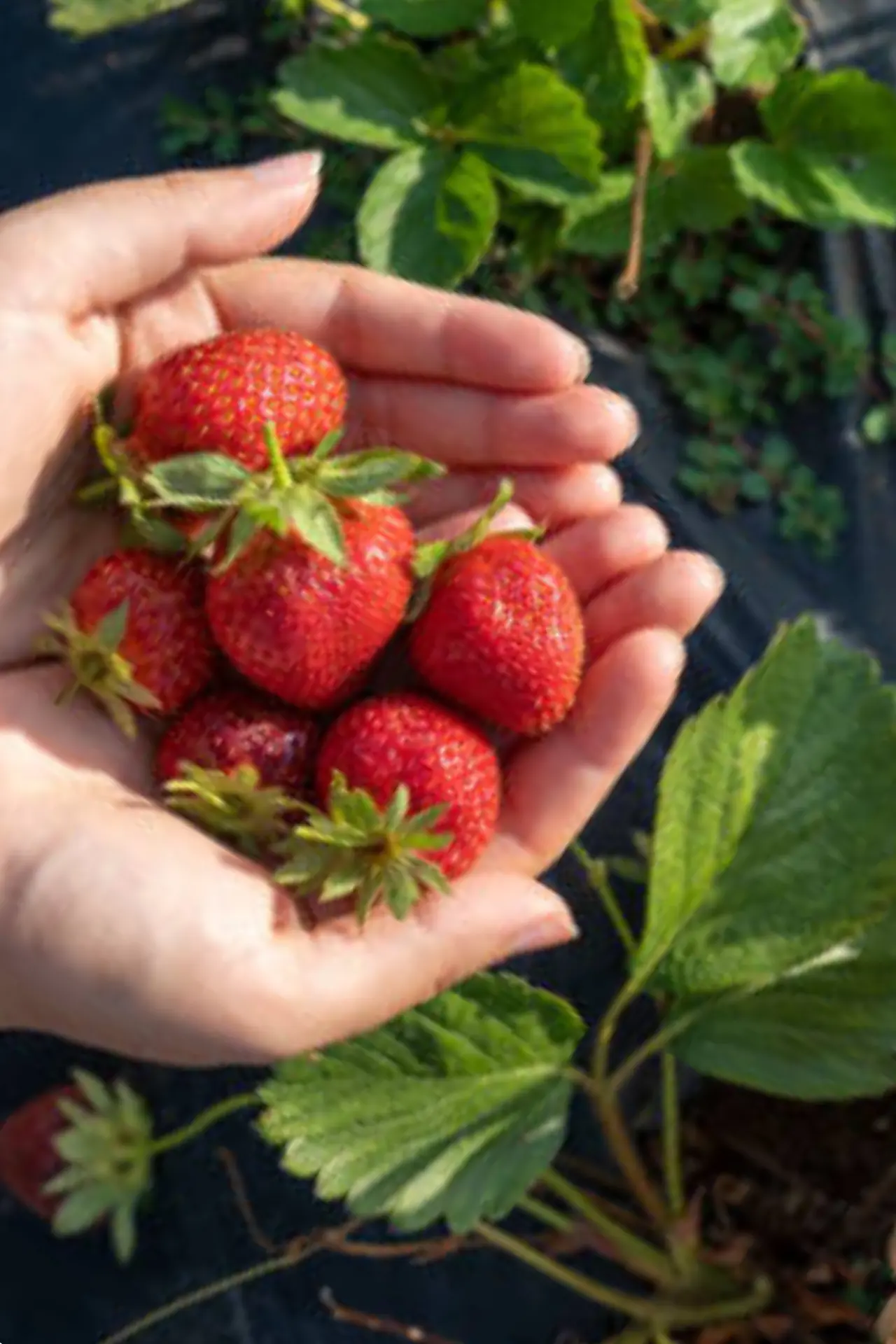
✔ Wait for red – Pick only when fully red, no white spots
✔ Morning pick – Berries are coolest + juiciest then
✔ Snip, don’t pull – Use scissors to cut the stem. Protects the plant
Freshly harvested strawberries are sweetest and juiciest.
.
🐛 Common Problems & Simple Solutions
Organic prevention keeps plants healthy without chemicals.
| Common Problem | Symptoms | Simple & Effective Solution |
|---|---|---|
| Yellowing Leaves | Pale leaves, weak growth | Add compost/balanced feed + water less |
| No Flowers or Fruits | Leafy plant, no blooms | Cut nitrogen, switch to potassium feed |
| Root Rot | Wilting + soggy soil smell | Improve drainage. Use pots/raised beds |
| Small or Misshapen Fruits | Tiny or weird-shaped fruit | Water regularly + feed properly |
| Leaf Spot Disease | Brown/black spots on leaves | Remove bad leaves + give more airflow |
| Pest Attack (Aphids / Mites) | Curled leaves, sticky stuff | Spray neem oil or mild soap water weekly |
| Dry or Bitter Fruits | Hard, poor taste | Water consistently + mulch soil |
🌱 Quick Prevention = No Stress Later
4 quick habits to keep plants happy:
- Start clean – Use well-drained soil + disease-free roots
- Water smart – Pour at soil level, not on leaves
- Give space – Proper spacing = better airflow, fewer diseases
- Check weekly – 2 min inspection catches issues early
🍄 Major Beginner Problem: Fungal Diseases in Strawberry Plants
Fungus is the #1 headache for new growers. Too much water + no airflow = trouble.
🔍 Why it happens:
- Soil that stays soggy
- Overwatering, esp in cool weather
- Water sitting on leaves
- Plants too crowded
- Reusing infected soil
🌿 Common Fungal Diseases & How to Identify Them
| Disease | Symptoms | Simple Solution |
|---|---|---|
| Root Rot | Plant wilts even with wet soil, roots turn brown/mushy | Remove bad plant, improve drainage, water only when top soil dries |
| Powdery Mildew | White powder on leaves, leaves curl | More sun and airflow, spray neem oil or baking soda mix |
| Leaf Spot Disease | Brown/black spots, leaves drop early | Cut off infected leaves, don’t splash water on foliage |
🛡️ Prevent it is better than Cure:
- Drainage first – Stops root rot
- Morning watering – Leaves dry fast
- Space plants – Air can move
- Mulch – Keeps leaves off wet soil
- Clean pots/tools – No disease carryover
🌱 Beginner’s Golden Rule
Plant looks sad even after watering?
Check the roots first.
Most fungus starts underground, not on leaves.
⭐ Final Confidence Tip
Don’t panic if you see infection. Spotting issues early = you’re leveling up as a gardener. Good drainage + balanced watering + clean care = 90% of fungus gone.
⭐ Grower’s Tip
Most strawberry problems come from overwatering or overfeeding. Balanced care keeps plants productive and healthy.
🌱 Strawberry Roots Sowing & Harvest Season in Pakistan
| Stage | Time Period (Pakistan) | Key Notes |
|---|---|---|
| Best Sowing Season | September – October | Mild weather = strong roots, best start |
| Late Sowing (Optional) | November | Works in cooler areas. Fruit comes a bit late |
| Vegetative Growth | October – December | Leaves + runners grow. Water regularly |
| Flowering Stage | December – January | Cool nights = healthy blooms |
| Fruit Formation | January – February | Green berries appear. Don’t stress them with dry soil |
| Harvest Season | February – April | Pick fully red berries every 2-3 days. Sweetest time! |
| End of Season | Late April – May | Heat slows plants. Save runners for next year |
🌼 Why Strawberry Roots Are Perfect for Beginners
- Fast growth
- Low maintenance
- Small space friendly
- Great for kids and families
- Produces fruit in the first season
This makes strawberry roots one of the best beginner-friendly plants for home gardeners in Pakistan.
That’s why SeedBeej.pk are selling #1 starter plant for home gardens in Pakistan 🍓
❓ FAQs
➜ Do strawberry plants regrow every year?
Yes, strawberry plants are perennial and can produce fruit for multiple seasons with care.
➜ How many strawberries does one plant produce?
A healthy plant can produce 20–40 strawberries per season.
🌟 Final Thoughts
Growing strawberries from roots is simple joy.
Right timing + good soil + basic care = homegrown berries, even with no big garden.
If you’re just starting, strawberry roots are the smart choice. Easy to grow, beautiful plants, delicious results 🍓
Loved this! Time to start my strawberry patch 🍓🌿
Loved the simple explanation ❤️ Perfect for beginners like me. Thank you for sharing!
Very good i like it
Very good i like it
This Blog gives a lot of information to me
I’m really tanksful to them ❤️