🌿 Fresh Live Plants Delivered Safely | 🚚 Nationwide Delivery | 💳 Advance Payment Required for Plants, Liquids & Parcels over 3kg

Ultimate Adenium Plant Care Guide in Pakistan | Desert Rose

Adenium — also called Desert Rose — is one of the most stunning flowering plants you can grow in Pakistan’s warm weather. You will Learn Adenium Plant Care Guide in Pakistan.
What makes it stand out? That thick, swollen trunk called the caudex, its bonsai-like tree shape, and those gorgeous trumpet-shaped flowers. No wonder it’s a favorite for balconies, rooftops, patios, and gardens.
The most common type you’ll find is Adenium obesum. It belongs to the Apocynaceae family and naturally grows in the hot, dry regions of Africa and the Arabian Peninsula. Because it stores water in its caudex, Desert Rose handles dry spells way better than most flowering plants.
But here’s the catch: it hates too much water.
Give it plenty of sunlight, fast-draining soil, and careful watering, and your Adenium will stay healthy and bloom beautifully for years. Learn More About Adenium Plant Care Guide .

How to Grow Adenium from Seeds
Growing Adenium from seed is honestly one of the most rewarding parts of having a Desert Rose. You get to watch it go from a tiny sprout to a mature plant with that beautiful swollen trunk. With good care, seed-grown Adeniums even develop really attractive caudexes over time.
1. Start with Fresh Seeds
Grab fresh, healthy seeds from a trusted source. Fresh seeds germinate way better than old ones that have been sitting around.
Adenium seeds are usually long and slim, with little feathery hairs on each end.
2. Use a Fast-Draining Mix
Baby Adeniums hate sitting in wet soil. They need a mix that drains fast.
A good seed mix can be:
- Cocopeat
- Coarse sand
- Perlite
- Fine compost or a small amount of organic matter
The key here is drainage. Skip heavy garden soil — it holds too much water and will rot the seeds.
3. Sow the Seeds
Lay the seeds flat on the surface, or press them in just lightly. Don’t bury them deep.
Mist the top gently with a spray bottle to moisten it.
Keep your tray in a warm spot with bright light. Just protect the tiny seedlings from harsh midday sun at first.
4. Keep It Slightly Damp
While the seeds are sprouting, don’t let the soil dry out completely. But don’t drown it either.
Too much moisture = fungus and rot. Think “lightly moist” not “soaking wet”.
5. Wait for Germination
In warm weather, Adenium seeds pop up pretty quickly. Depending on freshness and conditions, you’ll see seedlings in a few days to a few weeks.
Once they sprout, slowly move them into more sun. That helps them grow short, strong stems instead of getting tall and leggy.
Growing from seed takes patience, but seeing that little caudex start to form makes it totally worth it.
Growing Adenium as a Plant
Once your Adenium seedling settles in and gets established, the care gets way easier.
As it grows, you’ll start to see its signature feature — that thick, swollen base called the caudex. It stores water and gives Desert Rose its cool, sculptural look.
The best part? Adenium is super flexible. You can grow it:
- In decorative pots
- On balconies
- On rooftops
- In patios
- In outdoor gardens
- As a bonsai-style plant
In the right conditions, Adenium can eventually grow into a bigger shrub or even a small tree. That’s why growing it in a container is perfect if you want to keep its size in check.
Basically, whether you have a tiny balcony or a big garden, there’s a way to fit a Desert Rose in.
Popular Types and Varieties of Adenium
Desert Rose comes in so many shapes and colors — especially when you start looking at hybrids. There’s one for every kind of grower, from casual balcony gardeners to serious collectors.
Adenium obesum
This is the classic Desert Rose you’ll see everywhere. It has that signature swollen caudex, branching stems, and beautiful, trumpet-shaped flowers. Easy to grow and perfect for beginners.
Adenium arabicum
Collectors love this one. Arabicum is known for its big, chunky caudex and compact, tree-like shape. It looks amazing grown as a bonsai and becomes a real showpiece over time.
Adenium swazicum
A little different from the others. Swazicum has gorgeous flowers and a unique growth habit. It’s a fun one to add if you want variety in your Adenium collection.
Hybrid Adeniums
Most of the Adeniums you’ll find in nurseries today are hybrids. Growers have bred them for specific colors, petal shapes, and even double or multi-layered blooms.
You can find flowers in tons of shades:
- Pink
- Red
- White
- Dark pink
- Purple-pink
- Red and white combinations
- Various bi-coloured patterns

Choosing the Right Pot for Adenium
Getting the pot right is super important for Adenium, because it really doesn’t like wet feet.
| Pot Feature | Why It Matters | Best Practice |
|---|---|---|
| Drainage Holes | Prevents water from collecting around the roots, reducing the risk of root rot. | Always choose a pot with multiple large drainage holes. |
| Pot Material | Breathable materials help excess moisture evaporate, keeping the soil from staying wet for too long. | Terracotta or clay pots are ideal, especially for Pakistan’s warm and humid climate. |
| Pot Size | Oversized pots retain excess moisture, which can damage the roots and caudex. | Select a pot that fits the current size of the plant and upgrade gradually as it grows. |
Best Soil for Adenium
Adenium loves soil that’s loose, airy, and drains super fast. If water sits around the roots, you’ll have problems.
Here’s a simple soil mix that works really well:
| Material | Purpose |
|---|---|
| Coarse sand | Improves drainage so water doesn’t sit |
| Perlite | Keeps the mix light and airy |
| Cocopeat | Holds just enough moisture without getting soggy |
| Compost/vermicompost | Adds organic matter and nutrients |
| Garden soil | Gives the mix some structure and body |
The exact ratio can be adjusted according to your local conditions, but the finished mixture should drain quickly.
The golden rule: when you water, it should drain out quickly.
Avoid heavy, compact soil. Poor drainage is one of the most common reasons Adeniums develop root or caudex rot.
How Much Sunlight Does Adenium Need?
Sunlight is everything for a Desert Rose. Without enough of it, you won’t get that bushy growth or those beautiful blooms.
A mature Adenium generally performs best with around 6–8 hours of strong sunlight each day.
Mature Adeniums thrive when they’re baking in bright, direct light.
Perfect spots in Pakistan:
- Sunny rooftops
- Balconies with direct sunlight
- Outdoor patios
- Sunny garden areas
What happens with too little light?
Your Adenium will get tall, stretchy, and “leggy” with fewer flowers. Basically it’ll be reaching for light instead of putting energy into blooms.
One important tip:
If you just bought your Adenium or repotted it, and it came from a shady nursery, don’t throw it straight into harsh sun. Ease it in gradually over a week or two so the leaves don’t burn.
Think of it like this: Desert Rose = desert plant. The more sun you give it, the happier it is.
How to Water an Adenium
The easiest rule to remember is:
Let the soil dry before watering again.
In hot weather when it’s actively growing, water thoroughly until it drains out the bottom. Then stop.
Don’t stick to a fixed schedule. How often you water depends on:
- Temperature
- Pot size
- Soil mixture
- Sunlight
- Humidity
- Season
In cooler months or when it’s dormant, it needs way less water. Sometimes almost none.
Overwatering kills Adenium faster than underwatering. When in doubt, wait a few more days.
Signs of Overwatering
Watch for:
- Yellowing leaves
- Soft caudex
- Mushy roots
- Unpleasant smell from the soil
- Sudden leaf drop
- Stem or caudex becoming soft
A soft, mushy caudex is the big one. That usually means too much water or poor drainage, and it’s serious.
Fertilizing Adenium
Adenium loves a little food when it’s actively growing.
What to use:
A balanced fertilizer or one made for flowering plants. Just follow the label for how much and how often.
Feeding during growing season helps with:
- Healthy foliage
- Strong branches
- Better flowering
- Overall plant growth
Important: Don’t overdo it. More fertilizer ≠ more flowers. Too much can actually burn the roots.
Reduce or stop feeding when the plant enters a cooler-season dormancy.
Pruning Adenium for Better Growth
A little pruning goes a long way with Desert Rose. It helps shape the plant and pushes out more branches.
What to cut off:
- Dead branches
- Weak growth
- Damaged stems
- Unwanted branches
You can also trim healthy stems. That encourages new side shoots and makes the plant bushier and fuller.
Pro tip: Always use clean, sharp tools. It keeps disease away and gives you clean cuts.
Prune smart, and your Adenium will look thicker and flower even better.

How to Encourage Adenium to Flower
No flowers? Check the basics first. Most of the time it’s one of these:
Give it enough sunlight
Not enough light is the #1 reason Adeniums won’t bloom. Aim for 6-8 hours of strong, direct sun.
Don’t overwater
Wet soil all the time stresses the plant and rots the roots. Let it dry out between waterings.
Feed appropriately
Use a flowering fertilizer during the growing season. That gives it the boost it needs to bloom.
Be patient
Young Adeniums need time to mature. They won’t flower a ton right away.
Prune when appropriate
A light trim encourages more branches. More branches = more spots for flowers to grow.
Get the sun, water, and food right, and your Desert Rose will put on a show for you.
Common Adenium Problems
| Problem | Possible Cause | What to Do |
|---|---|---|
| Yellow leaves | Overwatering, stress, seasonal changes | Check soil moisture and drainage |
| Soft caudex | Excess moisture or rot | Stop watering and inspect the roots |
| No flowers | Insufficient sunlight or immature plant | Increase sunlight and provide proper feeding |
| Leggy growth | Too little light | Move to a brighter location |
| Leaf drop | Temperature changes, watering issues or dormancy | Check growing conditions |
| Root rot | Poor drainage/overwatering | Improve soil drainage and watering |
| Mealybugs | Pest infestation | Treat promptly with an appropriate pest-control method |
Growing Adenium from Seed vs Buying a Plant
If you love a good gardening project, starting Adenium from seed is super rewarding. You watch everything – from the first tiny sprout to the caudex getting thick and the branches forming.
But… it takes patience. You’ll be caring for it every step of the way.
If you want to enjoy a Desert Rose without waiting for the seed-growing stage, you can also purchase an established Adenium plant.
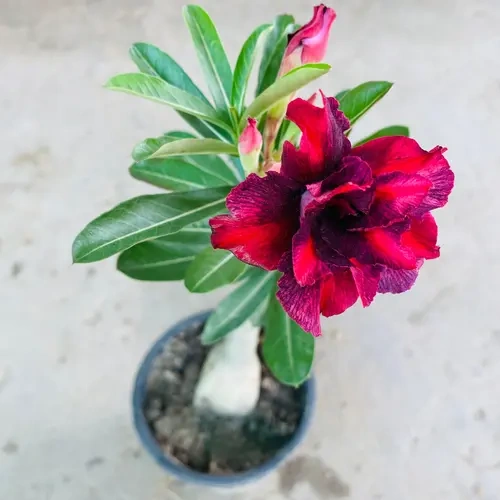
Seed Beej – Adenium obesum Mixed Colours Plant offers Adenium plants, making it easier to start with an established plant and focus directly on its care and flowering.
Once you bring an Adenium home, follow the same basic principles: plenty of sunlight, fast-draining soil, careful watering, and suitable feeding.
Final Thoughts
Adenium, or Desert Rose, is such a showstopper. You get those bright, colorful blooms plus that cool sculptural caudex. It looks amazing in a pot, on a balcony, or even styled like a bonsai.
Whether you start from seeds or buy a grown plant, the care is really simple:
Lots of sun. Fast-draining soil. Don’t overwater.
Give it that and a little patience, and your Desert Rose will become the star of your garden, balcony, or rooftop.
CTA of Adenium Plant Care Guide
Ready to add a Desert Rose to your garden? 🌸
Start your Adenium journey today! Grow one from seed and enjoy watching it develop, or choose an established Adenium plant if you want a head start. Explore Adenium plants at Seed Beej and bring home a beautiful Desert Rose for your collection.